

Unknown's avatar

About dborys

Author of STREET STORIES suspense novels

Words Change Worlds

I’ve written about Pongo Teen Writing Project in the past, but in case you missed it, it’s a program here in Seattle that mentors kids in juvenile detention (begun in 1998) and the state psychiatric hospital for children (begun in 2000).  Volunteers work with these youth to express themselves through poetry as a way to understand, deal with, and recover from difficulties in their lives.

They continue to make huge differences in these kids lives, and are expanding as they are able in order to spread the goodness.  Here’s an excerpt from a recent email they sent out talking about their continued efforts:

I’ve completed a chapter on Pongo’s methods for teaching writing to distressed youth. The chapter will be included in a book “Expressive Writing: Foundations of Practice,” edited by Kathleen Adams (Therapeutic Writing Institute), that will be published by Rowman & Littlefield Education next year. “Foundations” is the first book in a series of titles on expressive writing, to which I will be contributing!

Pongo is mentoring new poetry projects at agencies in Seattle and around the country. In addition to Pongo’s first duckling project at Friends of the Children, we have projects starting up locally at New Horizons Ministries (drop-in for homeless youth) and at Children’s Hospital (in-patient psychiatric clinic).

If you are a teen anywhere, their website offers writing exercises and for teachers who believe in the power of words to change lives, they also list free resources.  If you know of similar programs around the country or the world, I invite you to post information and links here to spread the word.
Survival of the Fittest

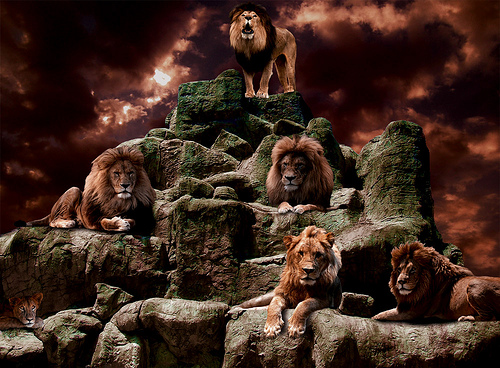
I get so frustrated when people justify selfish actions and attitudes by claiming survival of the fittest is the natural and desired way to look at life.  It’s evolution, they say, and ensures successful and ever-better growth for humankind. The healthiest, most powerful male seeks out and mates with the most beautiful, intelligent female to supposedly produce a better generation.  Those in positions of power set the rules they feel move the future in the right direction.

Referencing the law of the jungle is often used as an excuse for preying on others to get ahead.  People who do so are reducing humans to the level of an animal.  If you believe in God, you probably believe we are more than that.  Christ teaches an upside down kingdom; the meek shall inherit the kingdom of heaven.  Not the strong and powerful.

Even if you don’t believe in the existence of a soul, surely human intelligence puts us at least at a slightly higher level than a troop of primates.  We are more than just our strength, looks and intelligence.  We are thinking beings that can evaluate facts and choose our behavior, rather than be led by set instinctual patterns.

Let’s say, though, that survival of the fittest IS the primary rule of human evolution.  What do we want humanity to look like in the future?  Why do we often define “fittest” primarily as physical attributes? Strength, beauty, intelligence. My ideal of a perfect society with be one in which compassion and unconditional love are practiced by all.  We should strive to develop virtues that have nothing to do with genetic, animal-level chest pounding.

I found the article below addresses the same issue, and highlights the idea that cooperation has been one of the most significant strategies used in evolution.  In fact, science has shown that cooperation is used in nature and “has been the basis of all the most dramatic steps in the history of life.”

Cooperation means working with people of all strengths and weaknesses to build a better world, not a better “me.”  It elevates, or “evolves” the society we live in rather than the physical humans who live in it.  If we can do what we can to assure the survival of the weakest among us, that, to me, is the greater strength.

What’s more, although the phrase conjures up an image of a violent struggle for survival, in reality the word “fittest” seldom means the strongest or the most aggressive. On the contrary, it can mean anything from the best camouflaged or the most fecund to the cleverest or the most cooperative. Forget Rambo, think Einstein or Gandhi.

via Evolution myths: ‘Survival of the fittest’ justifies ‘everyone for themselves’ – life – 16 April 2008 – New Scientist.